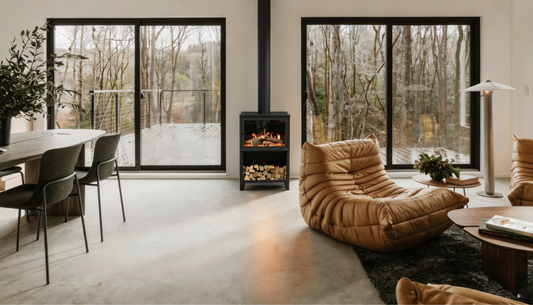

Water Vapor vs LCD vs LED Electric Fireplaces: A B2B Guide
Choosing between water vapor, LCD and LED electric fireplaces starts with the project brief. Compare how the flame is produced, what the installation needs and who will maintain it. A striking showroom effect is useful only if it also works in the finished space.
This guide helps distributors, interior designers and project buyers shortlist a flame technology before requesting samples, drawings and a quotation.
Water vapor vs LCD vs LED: the quick comparison
These are practical buying categories, not mutually exclusive components: water vapor and LCD systems may also use LED lighting. Here, “LED fireplace” means a conventional light-based flame-effect system.
| Technology | Flame presentation | Main planning priority | Maintenance focus |
|---|---|---|---|
| Water vapor | Light illuminates fine water mist to create a moving, three-dimensional effect. | Water arrangements, airflow and access to the mist system. | Water quality, tank and atomizer cleaning, and replacement parts. |
| LCD | A screen displays flame imagery, sometimes combined with physical logs and lighting. | Viewing angles, ambient light, reflections and service access. | Glass care and access to the screen and electronics. |
| Conventional LED | Lighting and optical components create flame movement around a fuel bed. | Visible opening, recess depth, flame settings and any heater outlet. | Glass care and access to lighting, optical and heating components. |
Heating capacity is a separate specification. None of these technology labels confirms whether a particular model includes a heater.
When should you choose a water vapor fireplace?
A water vapor fireplace suits a brief that prioritizes a flame effect with physical depth and naturally changing movement. It creates the appearance of fire using illuminated mist rather than combustion. For an open-top display, assess it from every intended viewing position.
In a hotel lounge or commercial reception area, test the sample with the room’s ventilation running. Air movement can change the mist presentation. Plan how staff will reach the water system without dismantling the finished joinery.
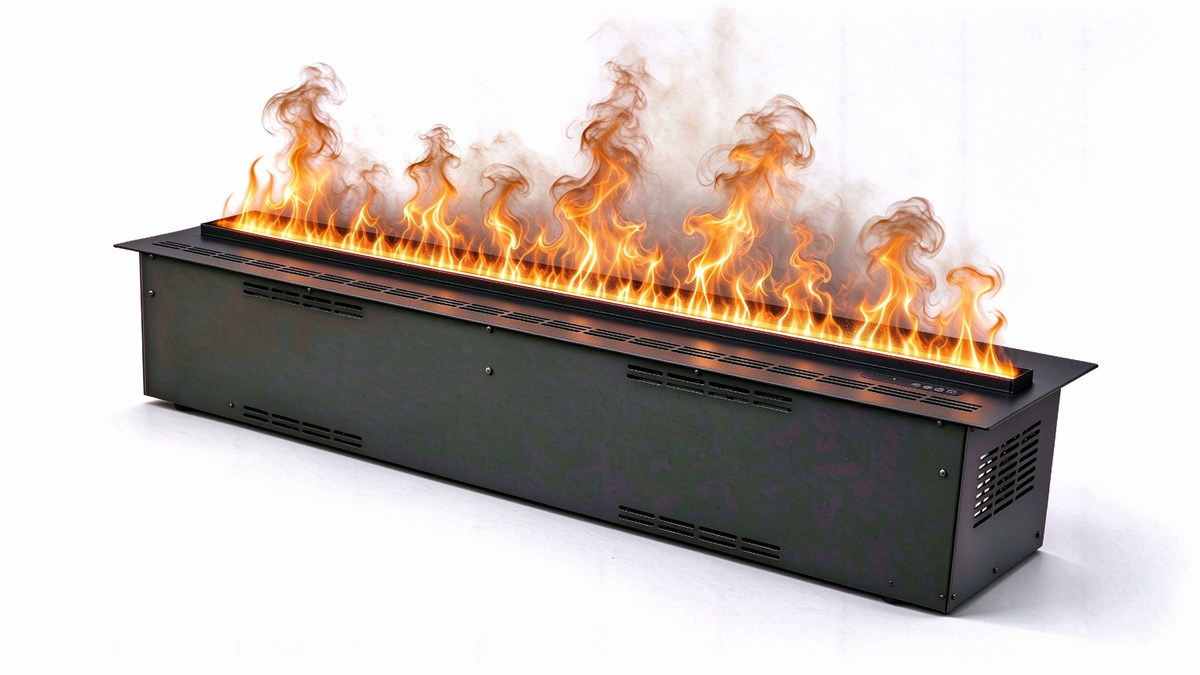
Explore the SPZK Aurora water vapor fireplace as a starting point. Ask for the current manual, water-quality requirements, filling or connection method, cleaning procedure and service-parts list. Agree on a maintenance routine suited to the operating hours and local water conditions.
When is an LCD electric fireplace a better fit?
An LCD electric fireplace is worth considering when the design brief favors detailed flame imagery in an enclosed display. Evaluate a live demonstration at both seated and standing eye levels. Screen resolution alone does not tell you how convincing the effect will look through the finished glass.
Check reflections in daylight, dark-scene contrast, the appearance of the logs and the transition between the image and the physical fuel bed. For hospitality projects, ask to see a longer playback demonstration and confirm start-up behavior after a power interruption.
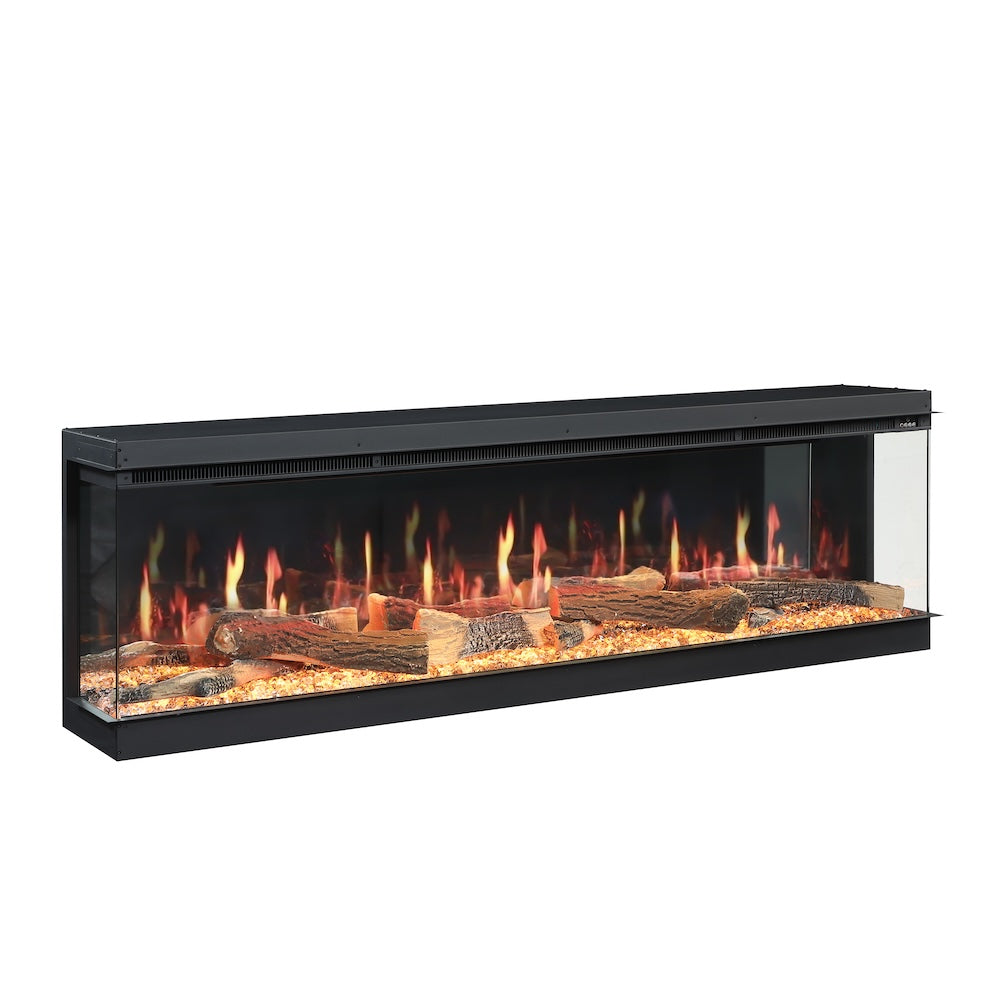
The SPZK Landscape LCD electric fireplace is the relevant product to review. Request the specification for the exact configuration, including available flame content, controls and access requirements. Confirm any content-update function before including it in a project brief.
When should you shortlist a conventional LED fireplace?
A conventional LED flame system is a useful option when buyers want adjustable flame lighting without a water supply. Compare the actual flame movement, brightness range, ember-bed detail and appearance in the intended room lighting.
For a recessed feature wall, review the Canyon built-in fireplace range. Its product selection should be checked against the opening dimensions, finish and control requirements. A slim-looking front does not establish the required cavity depth or clearances.
If several rooms or units are being supplied, confirm that the approved sample, remote control, settings and replacement components match the production order. Do not assume every model in a series shares the same functions.
Compare the full project requirements before price
- Approve the visual effect. View a sample in comparable lighting and from the angles people will actually use.
- Separate ambiance from heating. Request heater availability, rated power, supply voltage and operating modes for the exact model.
- Coordinate installation. Obtain overall dimensions, framing drawings, clearances, electrical requirements and service access details. Add water-system requirements where applicable.
- Confirm the destination market. Request current compliance documents for the specific model and configuration. A general factory statement does not establish model-level suitability.
- Plan lifetime support. Compare cleaning tasks, spare parts, warranty terms, packaging, lead time and sample approval alongside the unit price.
For the broader room-planning process, read our electric fireplace selection guide for interior projects. For supplier evaluation, use our OEM/ODM fireplace sourcing guide.
Frequently asked questions
Which electric fireplace has the most realistic flame?
There is no universal winner. Water vapor offers moving illuminated mist; LCD emphasizes flame imagery; conventional LED systems use lighting and optics. Compare the sample’s depth, motion, reflections and brightness in the intended setting.
Does a water vapor fireplace produce heat?
The mist flame effect does not establish heating capacity. Some configurations may include a separate heater. Ask for the selected model’s rated heating specification rather than treating the visible flame as evidence of heat output.
Is a water vapor fireplace maintenance-free?
No. It needs a water and cleaning routine specified in its manual. Confirm access to the tank or water connections, atomizer and service components before the surrounding finishes are completed.
Can all three types be used in commercial projects?
Potentially, but suitability depends on the selected appliance, operating conditions, installation and destination-market requirements. Review these points with the supplier and project team before ordering.
Request a technology shortlist for your project
Send SPZK the project country, intended application, opening dimensions, quantity, preferred flame effect and target delivery date. Include whether heating is required and, for water vapor, whether a water connection is available.
Request a fireplace specification review and quotation to discuss suitable models, samples and the documents needed for your project.
Cover: AI-generated architectural concepts based on existing SPZK product images, not completed project photographs. Product selection and installation must follow the current model-specific documentation.